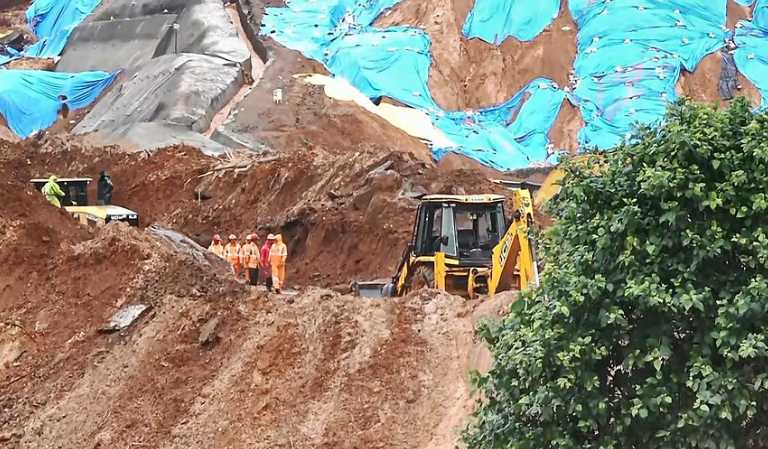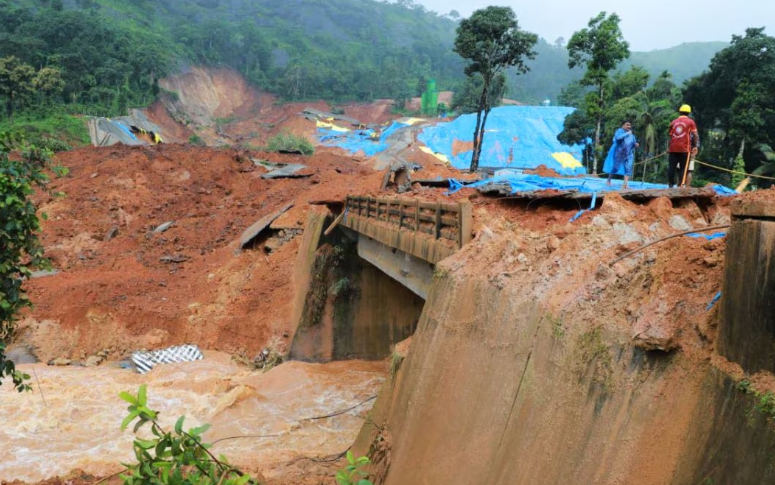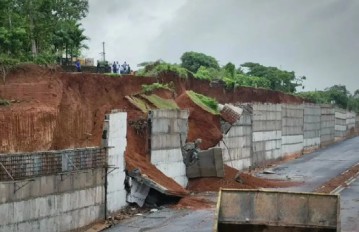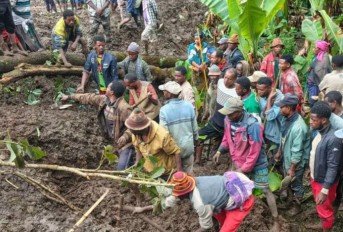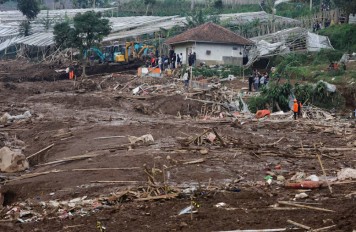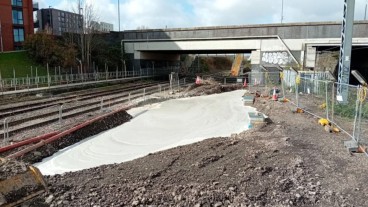
Landslide debris at the Kalladi tunnel construction site in Wayanad, where slope failure killed workers and triggered an inquiry into construction-stage safety. Source: PTI
A fatal landslide at the under-construction Anakkampoyil-Kalladi-Meppadi road tunnel project in Kerala has renewed concern over construction-stage slope stability in the Western Ghats. The landslide occurred near the Kalladi portal in Wayanad, killing at least three workers and prompting an official investigation into whether excavation, spoil storage, drainage and slope protection practices contributed to the failure.
The project is intended to improve all-weather connectivity between Kozhikode and Wayanad through an 8 km class twin road tunnel and associated approach works. The need for better connectivity is clear, especially in a district where existing mountain roads are frequently affected by landslides, traffic disruption and monsoon conditions. However, the latest incident shows that building infrastructure in fragile terrain requires more than tunnel excavation expertise. It requires disciplined management of the entire portal environment.
Early reports suggest that excavated material had accumulated near the work area before the landslide. State officials have alleged that warnings had been issued to remove stockpiled soil and manage slope instability, although the final cause has not yet been established through a detailed technical investigation.
Spoil management is not a secondary site activity. Large stockpiles placed near a slope can increase surcharge loading, alter surface drainage, promote erosion and raise pore water pressures during rainfall. If the material is placed near a natural drainage path or above a weakened cut face, it can become part of the failure mechanism.
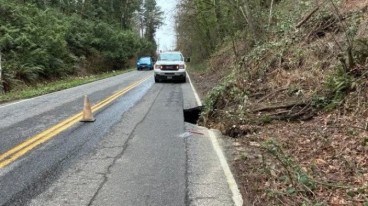
Tunnel portals are especially sensitive because they often require excavation at the base of steep slopes. Construction can remove toe support, expose weathered soil or rock, disturb natural drainage and create temporary unsupported ground. In landslide-prone terrain, even short-term construction stages must be assessed for stability, not only the final permanent design.
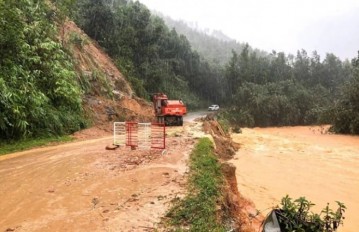
The same applies to rainfall. Some reports describe intense rainfall before the landslide, while others argue that broader rainfall levels in Wayanad were below normal and that construction intervention was the dominant factor. Both points reinforce the same engineering lesson: in fragile terrain, the interaction between rainfall, excavation, spoil placement and drainage must be continuously monitored.
The incident highlights the importance of landslide hazard mapping, rainfall monitoring and engineered spoil management in the Western Ghats. Source: The Week In (image by AP)
The tunnel project had reportedly received environmental clearance with multiple safeguards, including landslide hazard mapping, weather monitoring, vibration monitoring, controlled blasting, restrictions on spoil dumping and monitoring of nearby streams. These are exactly the types of controls expected for a major project in an ecologically sensitive and landslide-prone mountain range.
The critical question is whether such safeguards were implemented effectively at site level. Hazard maps and clearance conditions are useful only if they influence daily construction decisions. Work should be paused during unsafe rainfall thresholds, spoil should be removed or placed in engineered disposal areas, slopes should be inspected after excavation, and drainage paths should remain open and protected.
The Wayanad landslide is therefore not only a local construction accident. It is a warning about the geotechnical risks of infrastructure delivery in steep, wet and disturbed terrain. Tunnel portals, temporary cuts, spoil heaps, access roads and drainage channels must all be treated as part of one slope system.
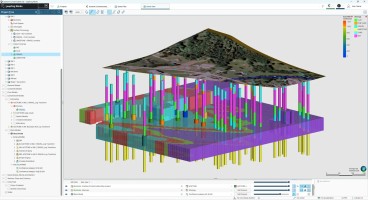
The investigation should now determine the actual failure mechanism, including ground conditions, rainfall intensity, excavation sequence, spoil placement, surface water flow and the adequacy of temporary protection. Until that is understood, the safest assumption is that the portal area remains a high-risk geotechnical zone.
Geoengineer.org uses third party cookies to improve our website and your experience when using it. To find out more about the cookies we use and how to delete them visit our Cookies page. Allow cookies