
Path to iconic lighthouse swept away by cliff collapse in England

A public path leading to an iconic lighthouse located in England has been cut off by a cliff collapse.
The Belle Tout Lighthouse is an iconic, inoperative facility situated at Beachy Head, East Sussex, England. Despite being inactive for more than a century, it has drawn a lot of attention mostly due to its exposure in the film industry and its stunning location that attracts numerous visitors. The lighthouse was constructed in 1832 and was decommissioned 70 years later as erosion processes made the sustainability of the facility challenging and it was replaced by a new structure at the base of the cliffs. It suffered critical damage during World War II but it was rebuilt during the 1950s. The structure is founded on a coastal region where erosion processes take place at high rates and cliff failures are common. In 1999, it was moved about 17 meters backward for protection. The tower is currently used as a facility for holiday accommodation.
Coastal erosion is a major issue in the UK caused by the action of wind forces, waves and tides. The erosion processes take place at significantly higher rates than other places around the world leading to severe coastal erosion and ground failures. Scientists emphasize that the phenomenon is exacerbated by climate change and, currently, about 3700 km of UK's coastline experience more than 10 centimeters of erosion annually.
In early August 2021, a cliff collapse sent debris into the sea and cut off the path to the Belle Tout lighthouse. The cliffs at Beachy Head comprise Cretaceous chalk. Some speculate that the recent action of high winds and powerful waves has caused the failure. However, erosion processes act progressively hence, the latter could have been the triggering effects and not the main cause.
Drone images retrieved from the site show that, at the location of the failure, the path was closer to the cliff than the lighthouse. However, this does not mean that the tower is not under threat in the future. In fact, coastal erosion averages a stunning 60 centimeters per year at the location. "You get large falls and then go for a number of years and nothing much at all," David Shaw, the owner of the lighthouse, stated. Mr. Shaw is aware of the prolonged erosion processes and the mechanisms that govern such phenomena but he believes the lighthouse is safe for the near future: "I'm trying not to panic. At the lighthouse we're about 20m away (from the edge of the cliff). It's hoped we'll have 20 or 30 years, maybe 40 if we're lucky, to go before we need to panic".
The high volume of the landslide alerted authorities that warned people to stay away from the region. They emphasized that the collapse can affect an area meters away from the cliff. Despite monitoring technology has made significant steps over the past years, the majority of the cliff failures occur rapidly and with no initiation signs. Earlier this year, a large collapse was reported in a sandstone cliff at the Jurassic Coast.
A video (retrieved years ago) of the Belle Tout Lighthouse and of the surrounding coastal region can be found below.
Sources: BBC, TheArgus, Eastbourneherald, Belletout
Image Gallery


Media
- Belle Tout Lighthouse Beachy Head
- Kentphotopics
Want to read more like this story?

Cracks open in South England's cliff indicating a potential collapse
Sep, 06, 2020 | NewsThick cracks that emerged on the top of a cliff in South England indicate a potential cliff collaps...

Massive cliff collapse in Jurassic Coast, UK
Apr, 12, 2021 | NewsA cliff collapse that occurred in England's Jurassic Coast is considered to be the largest to hit t...

Lighthouse was pulled away from eroding cliff in Denmark
Oct, 22, 2019 | NewsRubjerg Knude lighthouse, located in Hjorring, northwest Denmark, was moved from an eroding sand du...

Coastal landslide destabilizes cliffside Chalets in Devon as erosion risks intensify
Mar, 27, 2026 | NewsA coastal landslide along the East Devon coastline has destabilised several beach chalets at Bransc...
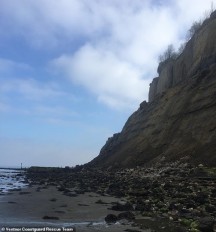
Cliff collapse in Isle of Wight, England: 8 people rescued
Apr, 18, 2020 | NewsEight people were rescued after a cliff suddenly collapsed in Isle of Wight, England. The incident...

Stunning cliff collapse in the Canary Islands caught on video
Nov, 14, 2020 | NewsA stunning cliff collapse that occurred in the Canary Islands, an autonomous community of Spain sit...

Historic Cottage Threatened by Huge Cliff Collapse in Devon
Nov, 04, 2024 | NewsA dramatic cliff collapse in Devon, England, has left a historic cottage just 10 metres from a 120-...

Cliff collapse swept away a cemetery in Italy
Mar, 22, 2021 | NewsA landslide carried away a cemetery situated at the edge of a cliff in northern Italy. The incident...

British farmhouse demolished after landslide leaves it teetering over cliff edge
May, 10, 2024 | NewsAn 18th century farmhouse that was hanging over a cliff edge in England’s North Norfolk district wa...
On This Day
August 24th 1832
READ MORE
Related Video

Trending
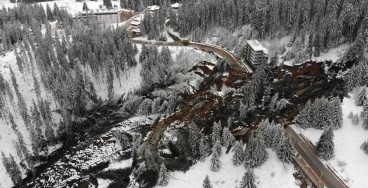
Active landslide threatens long-term connectivity in southern Bulgaria


PLAXIS example: Westergaard's added mass for hydrodynamic pressures

Rock Mass Classification Systems: A Global Review of Use and Dominant Approaches
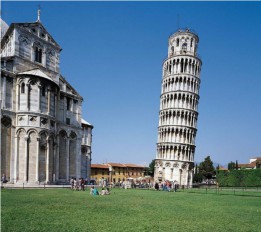
How does the Leaning Tower of Pisa survive earthquakes
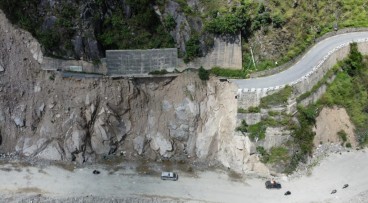
Nepal’s Himalayan settlements face escalating flood and landslide threats