
Mercury and Arsenic Hotspots Identified in Ghana’s Artisanal Gold Belt
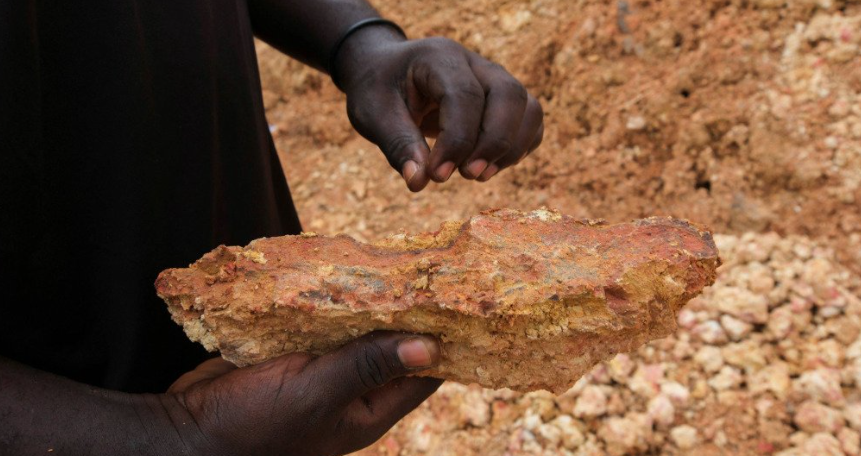
A year-long assessment by Pure Earth and Ghana’s Environmental Protection Authority sampled soil, water, crops and fish across six of Ghana’s 13 mining regions. Results show mercury in soils at Konongo Zongo averaged 56.4 ppm against a World Health Organization (WHO) safety threshold of 10 ppm, with peak readings of 1,342 ppm. Arsenic reached 10,060 ppm in some locations, reported as more than 4,000% above WHO guidance. The surge in artisanal production, driven by higher bullion prices, has expanded a poorly regulated sector that exported 66.7 metric tons of gold in the first eight months of the year, compared with 53.8 tons for all of 2024. The study was presented in Accra on 18 September with calls for immediate risk reduction.
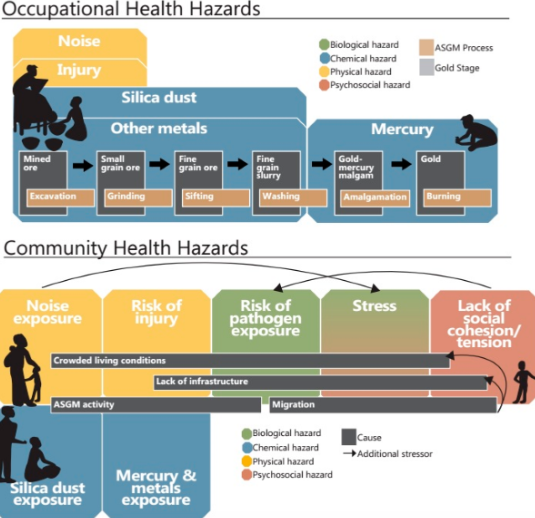
Field observations tie contamination to mercury use in amalgamation and the redistribution of mine wastes. In alluvial and saprolitic terrains common to Ghana’s goldfields, permeable soils and shallow groundwater enhance downward migration of dissolved metals, while storm runoff mobilizes tailings and fines into streams used for irrigation and fishing. Multi-pathway exposure is occurring through ingestion of contaminated water and food, inhalation of vapor and particulates during processing, and dermal contact. Clinicians report rising kidney disorders among children from mining communities, with X-rays showing retained mercury pellets after accidental ingestion. These findings align with the study’s conclusion that cumulative exposure across media is a serious health hazard requiring urgent intervention.
Authorities are pursuing sector oversight and have created the Ghana Gold Board to improve traceability. The study notes overlaps between regulated and illegal supply chains that complicate enforcement. Industry groups cite a ban on mercury use in amalgamation and the adoption of gravity concentration devices such as the Gold Kacha to reduce emissions at source. Environmental organizations report toxic pollution present across all 13 mining regions, underscoring the need for near-term controls. Priority actions include hot-spot mapping, tailings containment, stormwater management at processing sites, safer processing alternatives, and medical screening in high-exposure communities. Community protests and practitioner feedback indicate an expectation for accelerated cleanup and transparent monitoring.
Check out the following video discussing the urgent matter of soil contamination in Ghana.

Sources: reuters.com, energynews.oedigital.com, pureearth.org, miningweekly.com, mdpi.com
Want to read more like this story?
Deadly mining landslide in Central African Republic raises safety concerns
Jun, 10, 2026 | NewsAt least eight artisanal gold miners were killed after a landslide struck the Konyeme mining site in...

From Geology to Gold: The Engineering Before and After China's Record-Breaking Gold Deposit Discovery
Dec, 05, 2024 | NewsChina has cemented its position as a global leader in gold production with the discovery of the lar...

Springpole Project Strengthens Safety with In-Depth Geotechnical Focus
Nov, 15, 2024 | NewsFirst Mining Gold is making significant strides with its Springpole gold project in northwestern On...
The devastating impact of Gold Mining in South Africa
Feb, 20, 2019 | NewsFor 130 years South Africa has been exploiting its gold resources in Johannesburg. But at what...

NASA Research Indicates Mercury is Seismically Active
Sep, 29, 2016 | NewsBased on research from data collected with the MESSENGER spacecraft, NASA believes that Mercury is t...
Red Devil mine clean up project proposed by Bureau of Land Management, open to public review
Feb, 27, 2014 | NewsThe Bureau of Land Management (BLM) has recently released a project to prevent the migration of cont...

Mining waste disposal: A challenging issue
Mar, 04, 2019 | NewsThe time for Mining industry to change its approach about waste disposal techniques has arrived....

Video: Mine spill in British Columbia to release toxic silt to nearby lake
Sep, 16, 2014 | NewsA tailings pond at the Mount Polley gold and copper mine in central B.C. failed last month and relea...

Soil hydraulic properties affected by climate change
Sep, 17, 2019 | NewsAccording to a new study, published in the journal Science Advances, soil hydraulic properties can...
On This Day
August 4th 1906
READ MORE
Related Video

Trending

Life after gINT - Rethinking geotechnical data management for a new era

Is Africa gradually splitting into two sections?
Stop Guessing, Start Designing: Introducing Support Designer in Slide2


Alert level is raised in Mexico as the Popocatépetl volcano spews ash and gas
Nepal’s Himalayan settlements face escalating flood and landslide threats