
Comparative Study of Embedded Wall Displacements Using Small-Strain Hardening Soil Model Sponsored

Traditional analysis methods often fall short in addressing complex soil-structure interactions and non-linear soil behavior, but new research by Tzuri Eilat, Amichai Mitelman, Alison McQuillan and Davide Elmo shows that the ground is more predictable than we thought when it comes to wall displacements.
On their full research paper, the researchers used RS2, Rocscience's leading geotechnical engineering software, and the small-strain hardening-soil-model (SS-HSM) to rethink embedded retaining wall design.
Why Is Wall Displacement Prediction Important?
The prediction and management of wall displacements is critical in urban environments especially, due to the proximity of structures where large displacements can lead to significant damage and safety hazards.
Accurate displacement predictions are crucial for designing safe and cost-effective retaining walls, allowing engineers to anticipate potential issues and implement preventative measures. This foresight helps in minimizing the risk of costly repairs and legal liabilities, and most importantly it ensures the safety and well-being of communities.
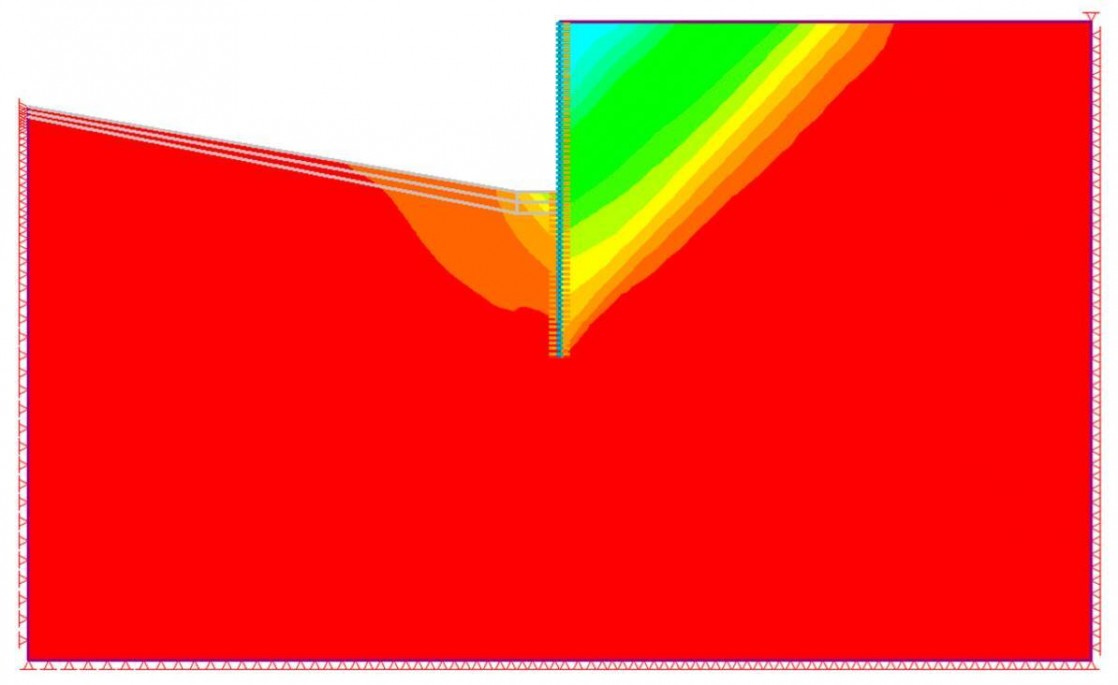
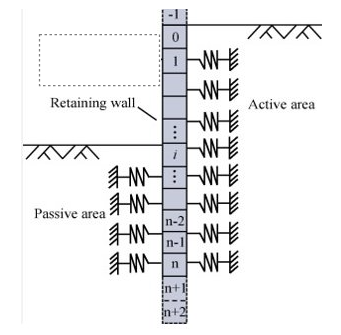
The Challenge of Traditional Methods
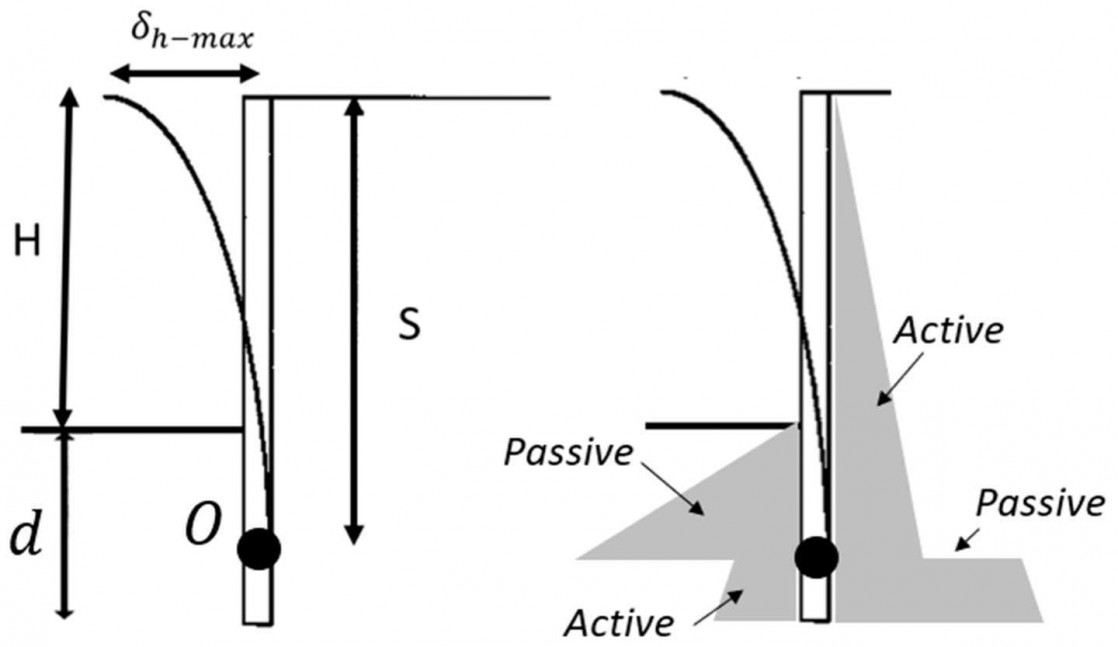
Embedded walls maintain the integrity of excavations and support the lateral earth pressures resulting from different ground levels. Historically, the design of these structures relied on the limit equilibrium method, which simplifies soil behavior into active and passive states.
Using this method, active and passive lateral earth pressures are assumed, as shown in Figure 1. While practical, this approach overlooks the soil-structure interaction analysis and cannot aid in displacement prediction, leading to designs that might be either overly conservative or inadequate.
What Is the SS-HSM, and How Does It Work With RS2?
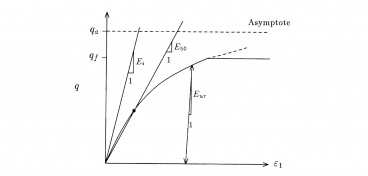
The hardening-soil-model (HSM) is an advanced soil material model that captures complex soil behaviours, including strain hardening and dilatancy, and differentiates between loading and un-loading stiffness. The small-strain hardening-soil-model (SS-HSM) is an extension of the HSM that captures nonlinear behavior under small strains.
SS-HSM’s major drawback, like most advanced material models, is that it requires the knowledge of several input parameters. However, with the right data, RS2 can leverage the SS-HSM for a more a nuanced, predictive analysis – especially for displacements. This integration allows for precise soil-structure interaction assessments and can accurately forecast stresses, strains, and displacements without defaulting to estimated earth pressure distributions, offering a clearer understanding of embedded retaining wall behavior.
Case Study: Demonstrating the Effectiveness of RS2 in Embedded Retaining Wall Behaviour
Researchers wrote external Python codes to automate the generation and interpretation processes for 300 embedded retaining wall models in RS2, and then incorporated the SS-HSM to assess wall behavior under various conditions.
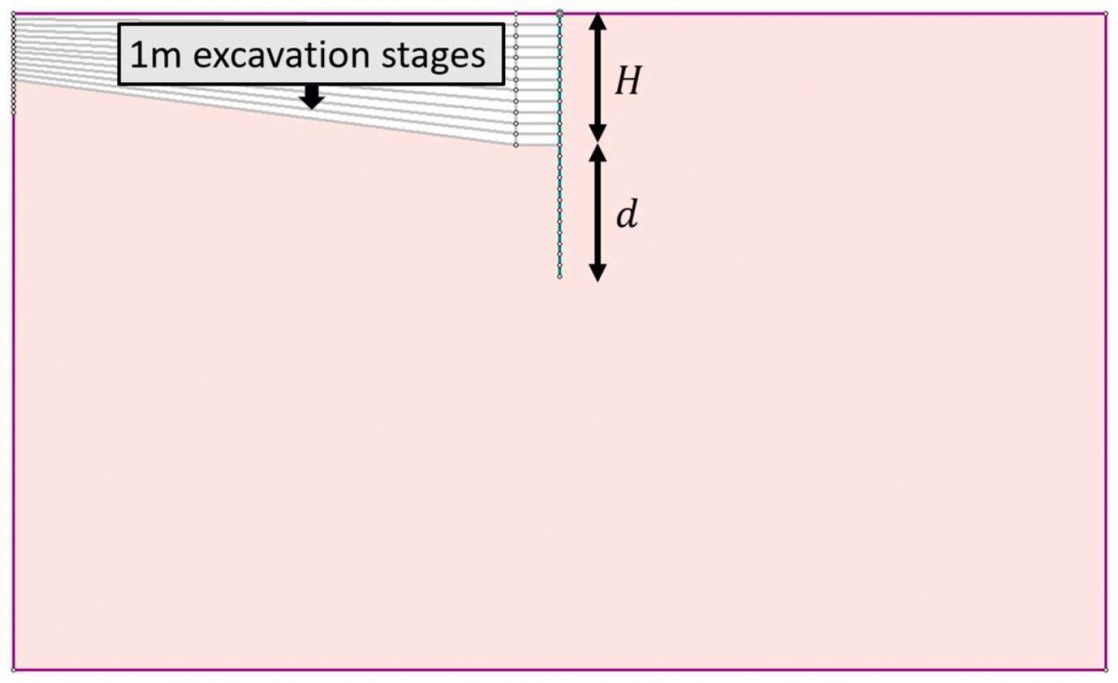
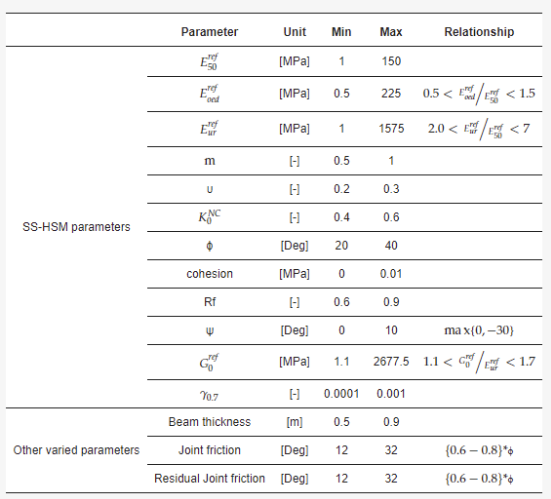
Figure 2 shows the detailed model geometry alongside the phases of excavation. In these models, the embedment depth d aligns with the excavation height H, which ranges from 3 to 8 meters. Table 1 shows the varied input parameters assumed for SS-HSM, plus other modeling parameters, and Figure 3 shows how results were generated from the model geometry.
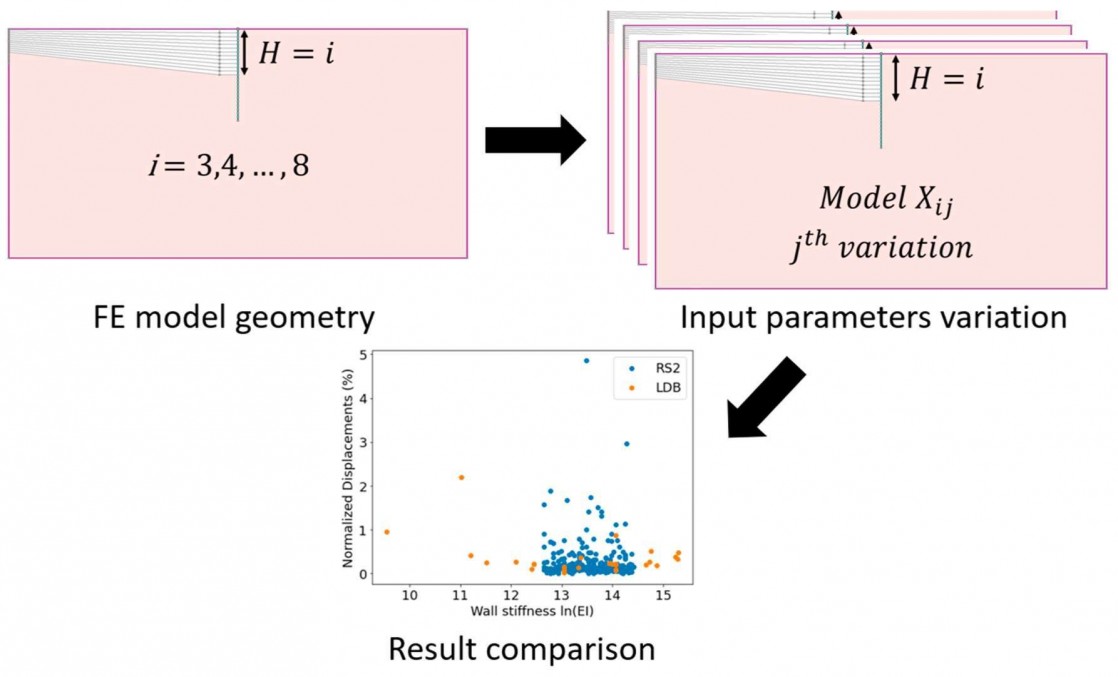
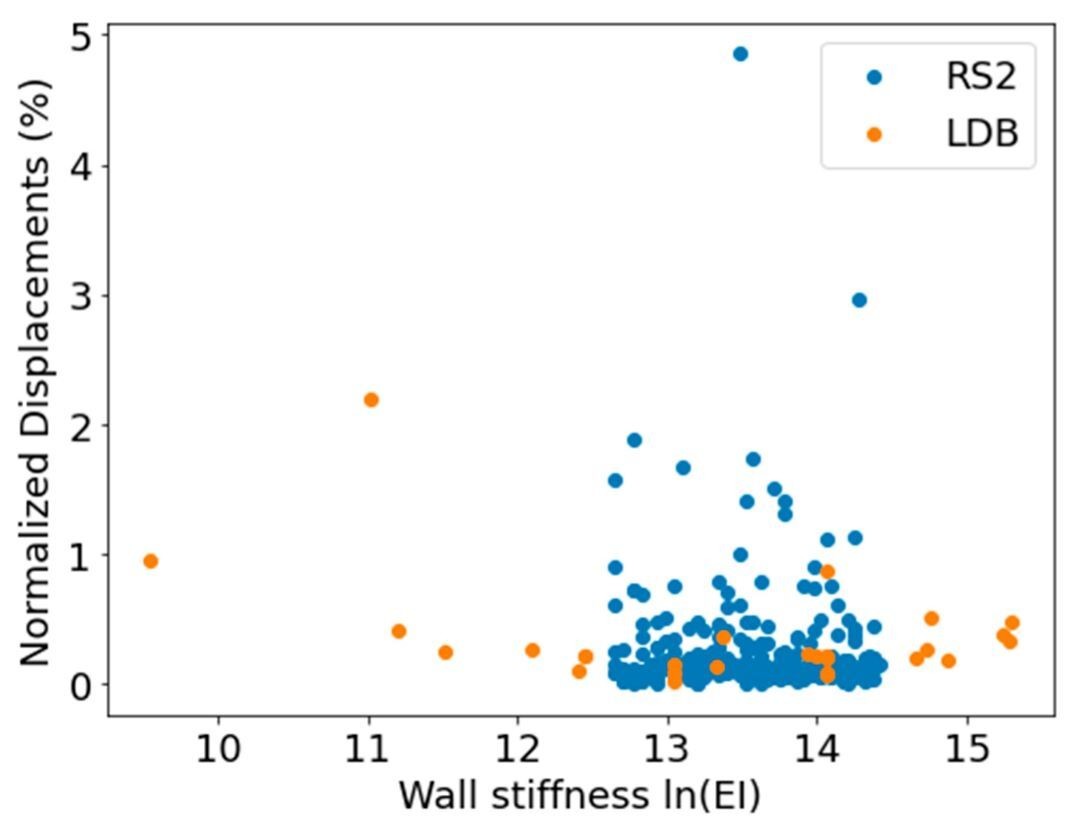
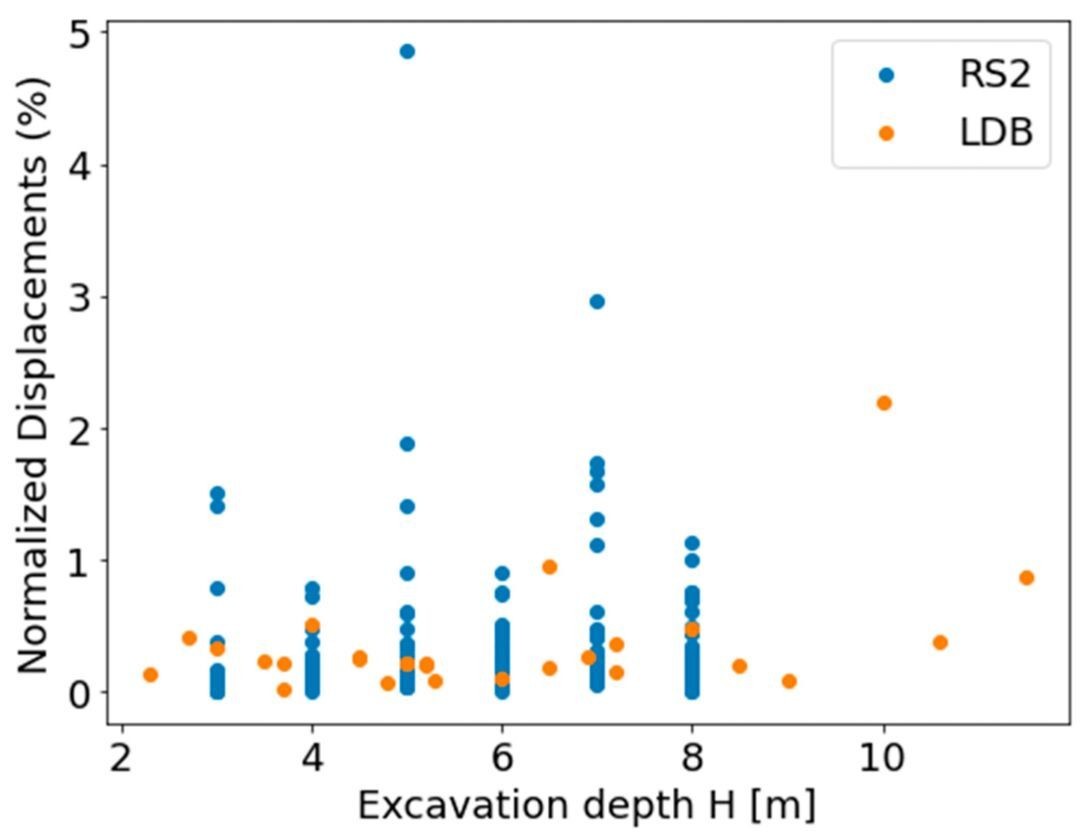
The RS2 model outcomes were then compared against empirical data from a reputable database (Long 2001), which facilitated a direct assessment of RS2's predictive accuracy in simulating real-world wall behavior. The results are shown in Figure 3; RS2’s results are in agreement with the Long database (LDB).
The study also examined the maximum wall bending moments, contrasting the findings from RS2's finite element models against those derived from conventional analytical methods. This comparison highlighted the tendency of traditional calculations to overpredict.
Case Study: Conclusions
- Alignment with Empirical Observations: The RS2 models, guided by the SS-HSM, demonstrated a high degree of correlation with empirical data, unlike some traditional methods that predicted unrealistic wall movements.
- Realistic Representation of Soil-Structure Interaction: The incorporation of SS-HSM allowed for a better understanding of soil behavior under various load conditions, offering a more reliable basis for design than the generalized assumptions used in conventional methods.
How to Get Better Results with RS2
Try these strategies to improve the design and analysis of embedded retaining walls using RS2:
- Utilize the SS-HSM: Adopt the small-strain hardening soil model for a deeper understanding of soil behavior, particularly for projects where soil-structure interaction is crucial.
- Leverage RS2’s Finite Element Analysis: Make full use of RS2's capabilities to simulate complex interactions and construction stages accurately, ensuring designs are both realistic and robust.
- Review and Validate Model Outputs: Compare model predictions against empirical data and existing case studies to validate accuracy, refine assumptions, and enhance the reliability of design outcomes.
These approaches help in achieving precise, reliable, and economically viable embedded retaining wall designs.
Conclusion
Overall, this case study demonstrates the advanced capabilities of RS2 in modeling embedded retaining walls and underscores the importance of adopting modern numerical methods in geotechnical design. Using the hardening soil model with small strain stiffness, RS2 offers a more accurate approach to embedded retaining wall design than some other traditional methods.
Want to try RS2 for your embedded retaining wall analysis? Start your free trial today!
Source: RS2 Breaks New Soil in the Displacement Analysis of Embedded Retaining Walls
Want to read more like this story?

Numerical Modelling: On the Importance of an Appropriate Soil Model
Jul, 22, 2021 | EducationThe following was prepared by Dr. Ronald B.J. Brinkgreve, and first presented by Virtuosity. Numeri...
Numerical Modelling: Soil Test Facility Learning Tool
Aug, 09, 2021 | EducationThe following was prepared by Dr. Ronald B.J. Brinkgreve, and first presented by Virtuosity. In a p...

Finite Element Analysis Shootout: RS2 vs Plaxis vs DIANA
Oct, 13, 2020 | NewsWhen it comes to selecting the right geotechnical software, functionality and precision are key fac...
Levels of Analysis Used in Retaining Wall Design
Feb, 06, 2026 | EducationThe analysis of retaining structures is commonly approached in three progressively more advanced le...

Commercial Construction Projects: a short description of different types of retaining structures
Mar, 08, 2022 | NewsRetaining wall systems are designed and manufactured to hold earth elements like rock and/or soil....
Classification and Mechanics of Retaining Structures
Feb, 06, 2026 | EducationThe Function of Retaining Walls A retaining wall is defined as a structure whose primary funct...
Considerations and Applications of FEA
Oct, 13, 2025 | EducationSetting up an FE model in geotechnical engineering is a process that requires careful consideration...

Automating Back Analysis in RS2: A Scalable Workflow for Model Calibration
Jan, 30, 2026 | NewsBack analysis is where geotechnical models stop being purely predictive and start being confronted...

7.4. Types of Retaining Structures
Jan, 01, 2021 | EducationGravity Walls The active earth pressures on the wall are estimated according to the discussion pre...
Form
Looking for more information? Fill in the form and we will contact Rocscience Inc. for you.
On This Day
August 22nd 1771
READ MORE
Related Video

Trending

Active landslide threatens long-term connectivity in southern Bulgaria


PLAXIS example: Westergaard's added mass for hydrodynamic pressures

Rock Mass Classification Systems: A Global Review of Use and Dominant Approaches

How does the Leaning Tower of Pisa survive earthquakes
Emergency ground stabilisation protects rail works near Salford Central