
Arbavere geothermal test station aims to explore Estonia’s subsurface heat potential
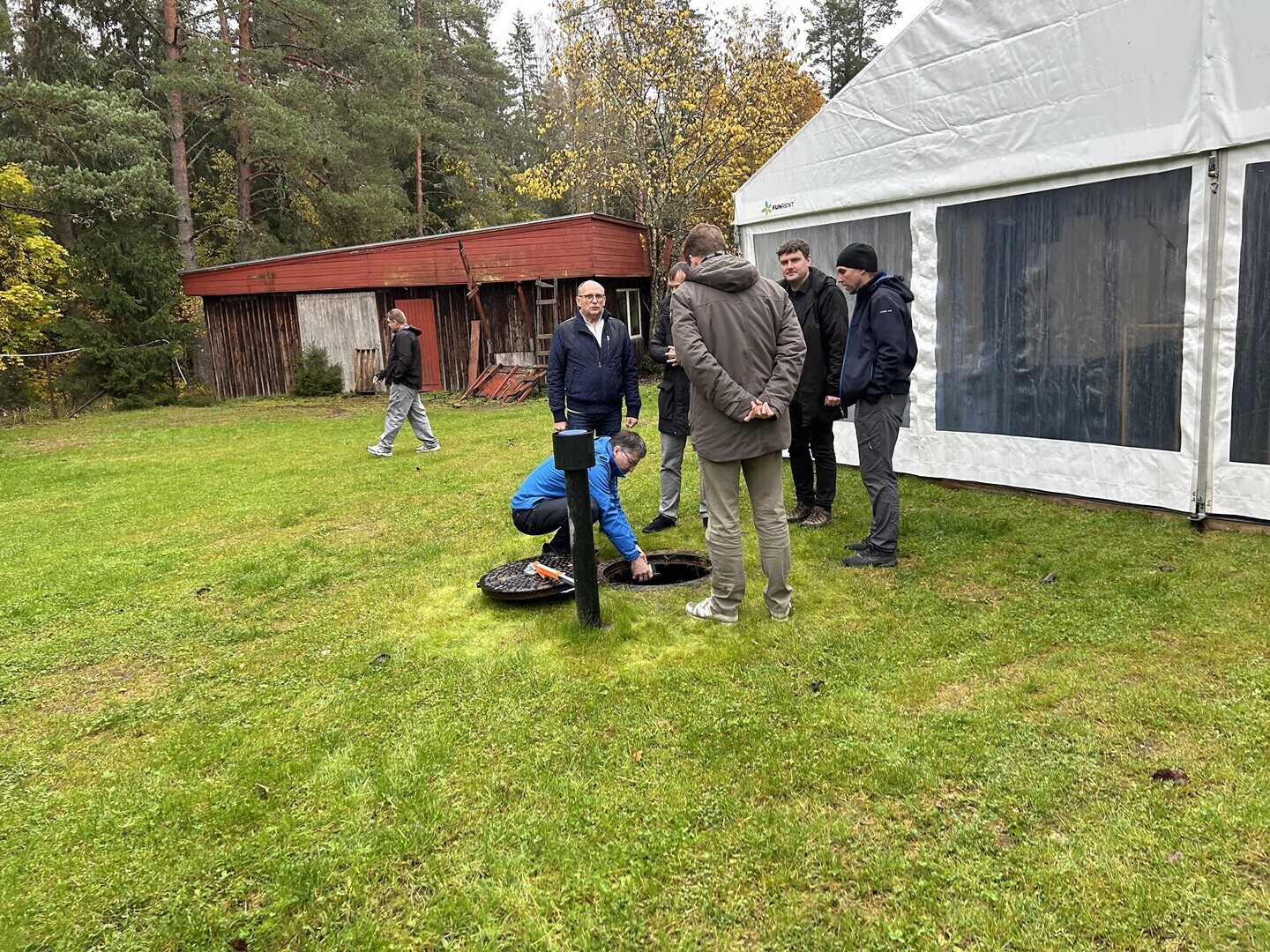
The Estonian Geological Service officially opened a new geothermal energy pilot station in Arbavere village, Lääne-Virumaa, featuring Estonia’s deepest test heat well at a depth of 712.5 meters.
This test facility is part of EGT’s GEOENEST project, which aims to investigate and validate geothermal energy applications in Estonia. The Arbavere pilot is designed to support heating and cooling of the research center buildings at the Arbavere site, covering about 1,000 m² of heated space.
The geothermal system uses a novel coaxial tube arrangement: groundwater is pumped up through a central conduit, transferring heat to a heat exchanger in the surface plant, then returned via the outer annular conduit. (ERR) The total thermal capacity of the well is estimated at 40 kW.
In addition to testing heating, the system will also assess the potential of the formation to act as a thermal energy storage reservoir, particularly to absorb and store residual heat during summer cooling periods.
According to geologists, this deep well approach allows extraction of heat more efficiently from deeper and more stable rock units, reducing the need for multiple shallower wells. The expected premium in subsurface temperature and stability at depth may make the technology more viable for dense urban settings or retrofits.
The total construction cost of the Arbavere facility exceeded €1.3 million. GEOENEST has allocated a budget of €3.8 million overall, funded via revenues from greenhouse gas emissions trading.
In Estonia, GEOENEST anticipates deploying three main pilot geothermal sites: the Arbavere installation, as well as pilot systems in Tallinn and Roosna-Alliku. The program includes initial baseline research, well drilling, instrumentation, and operational performance monitoring over multiple years.
For context, the Tiskre pilot (near Tallinn) using a 500 m deep borehole has already been completed and is among the first demonstration deep geothermal heating systems in the Baltics. (EGT)
EGT describes the Arbavere site as part of a broader effort to map geothermal resources across Estonia, evaluate technological options (e.g. open vs closed systems), refine legislative and regulatory frameworks, and build national capacity.
The GEOENEST project supports Estonia’s energy and climate policy goals by advancing low-emission, fuel-free heating technologies. Its aims include determining how geothermal systems can complement district heating, reduce reliance on imported fuels, and contribute to decarbonization of the built environment.
Source: ERR
Want to read more like this story?
UK geothermal projects expand from Cornwall power to Birmingham heating
Apr, 16, 2026 | NewsThe United Kingdom is advancing geothermal energy development through a combination of deep geotherm...
France advances underground energy heating with new geothermal boreholes
Oct, 02, 2025 | NewsGeothermal drilling has commenced in the Paris suburbs of Plessis-Robinson and Châtenay-Malabry as...

Geothermal Energy Could Power the U.S. for Millennia—Here’s How
Mar, 08, 2025 | NewsFor decades, geothermal energy has remained a largely untapped resource in the United States, limit...
UK’s first geothermal power station begins operation in Cornwall
Feb, 28, 2026 | NewsThe United Downs geothermal power plant in Cornwall has officially begun generating electricity, ma...

TU Delft starts drilling for geothermal project to heat campus and gather data
May, 01, 2023 | NewsThe large-scale geothermal project that started preliminary drilling on TU Delft campus in December...

Geothermal Energy Scales Up for Data Centers in New Mexico
Jun, 23, 2025 | NewsA 150-megawatt advanced geothermal project is underway in New Mexico to support data center operati...

GEMINI Project: Pioneering Geothermal Energy in Ireland
Nov, 26, 2024 | NewsThe GEMINI project, an ambitious €20/£17.3m initiative, is setting a new standard for sustainable e...

UK’s first deep geothermal energy plant in 37 years begins operations
Jun, 19, 2023 | NewsEden project’s deep geothermal heating plant, located in Cornwall, began operations on Monday, June...

Northern Ireland: new consortium to explore geothermal energy projects
Dec, 21, 2021 | NewsProjects that provide 100% renewable energy to homes and businesses across the region will be broug...
On This Day
August 21st 1883
READ MORE
Related Video

Trending

Block caving: A new mining method arises

Categories of isolated foundation footings
Maharashtra's longest road tunnel to be completed soon

Carnian Pluvial Episode: That time when it rained for 1-2 million years

China's Three Gorges Dam under pressure: Flood hazard downstream
Asbestos remains a deadly infrastructure risk across the UK

Major earthquake in southern Philippines causes deaths and widespread damage