Yellowknife sandpits almost vanished

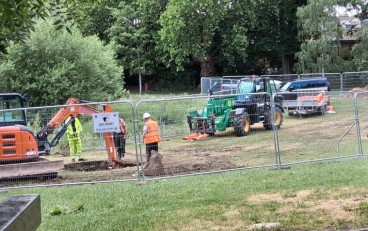
The sandpits in Yellowknife, a city located in North Canada, are almost gone after a long period of excavation conducted for construction purposes started back in the 1970s.
The 11,000-year-old sediment was formed as a large proglacial lake, Lake McConnell, touched the Laurentide Ice Sheet.
Currently, a small proportion of the young geological formation is left. The sand deposit is relatively rare in this area, according to Dr. Philippe Normandeau, a research scientist with the Northwest Territories Geological Survey (N.W.T.) Geological Survey. "It's one of the only areas where you have this much of it. We have a lot more of it as you go further inland…but closer to the lake, they are fairly rare," Dr. Normandeau, stated.
The deposit has facilitated local development. A large part of Yellowknife, included its airport have been constructed on top of it. "It's the only place around here where you can build an airport -like the one we have here- simply because of the area of flat ground that you can actually build something on that is well-drained," Dr. Normandeau added.
Back in 2004, the terrain was full of ponds, dunes and weathered rocks. Currently, extreme excavation has flattened the site and revealed the hard surface beneath.
Brent Horn, a local resident that has lived in Yellowknife for almost half a century stated that the amount of sand deposits were vast but, now, they are almost gone. Excavations have dropped the ground elevation below the water table while authorities have not interfered. "Now it's gone. It's all flat. This year I was out at the sandpits and I noticed there are trucks and tractors out there, piling up sand, and now it's got down to below the water table and it's just … a marshy quagmire of muck out there now. It's still going on and nobody seems to care. It's going to be gone and it's going to be wrecked forever," he said.
According to Alison Harrower, a spokesperson from Yellowknife, the sand deposits have deteriorated, but, officials will take action to preserve the remaining amounts. "There is a reclamation plan in place to prevent a complete dig-out of this specific area of the sandpits in accordance with GNWT [Government of the Northwest Territories] land lease requirements," Mrs. Harrower, stated.
Source: CBC
Want to read more like this story?

How much sand do we have left? New transport equations for carbonate deposits
Jun, 12, 2020 | NewsA new study provides insights and suggests new models on carbonate sand deposits movements. The stu...

Dam failure due to heavy rainfall in South Carolina
Dec, 23, 2019 | NewsA dam located in Aiken County, South Carolina, burst after a long period of rainfall struck the sur...

Nigerian community threatened by intense ground erosion
Jun, 06, 2019 | NewsA village in southern Nigeria is threatened as soil erosion has caused severe issues. People have...
Perpetual landslide in Summerland, Canada
Dec, 14, 2018 | NewsA hillside is eroding and has been moving for almost a century in Summerland, Canada. The landsli...

Mudslide strikes roadway near Williams Lake, Canada
Mar, 29, 2020 | NewsA roadway in British Columbia, Canada was closed after a mudslide struck north of Williams Lake Cit...

Brigantine Connector Project
Oct, 07, 2024 | NewsDuring the construction of the 2,900-ft-long tunnel/depressed roadway section of the Atlantic City-...

Mudslide struck Mansfield, UK: 35 residences evacuated
Nov, 07, 2019 | News35 residences have been evacuated after a mudslide hit near the Bank End Close in Mansfield, United...

The major role of Geology on the D-Day Landing in Normandy
Jul, 11, 2018 | NewsThe campaign that led to the WW2 allied victory in May 1945 began with the invasion in Normandy (Jun...

Texas Lake Dunlap dam collapse
May, 31, 2019 | NewsLake Dunlap dam, located near New Braunfels, Texas, experienced a spillgate failure on Tuesday, May...
On This Day
August 21st 1883
READ MORE
Related Video

Trending

Lake Chippewa’s floating island that has to be boat-pushed every year

How to Model Piles in PLAXIS

3 Types of Retaining Walls and Revetments


How Do Dams Trigger Earthquakes?
Deadly mining landslide in Central African Republic raises safety concerns