Recovering Critical Minerals from Waste: New USGS-State Partnerships Underway
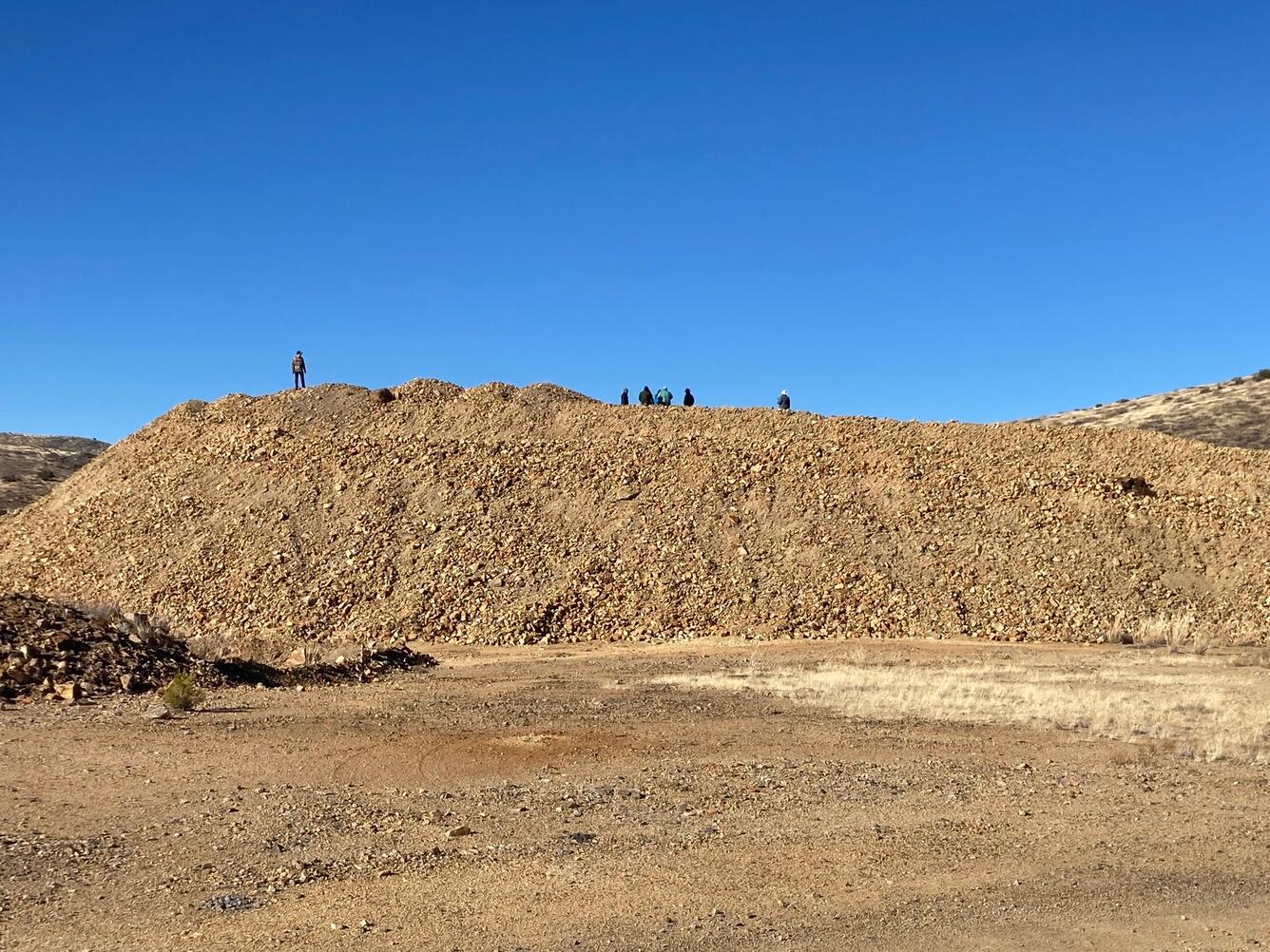
The U.S. Geological Survey (USGS) has awarded nearly $3 million in cooperative agreements to support 13 state geological surveys in joint work to inventory and characterize critical minerals in mine waste at both active and legacy mining sites. The project is organized under the Earth Mapping Resources Initiative (Earth MRI).
Under the agreements, the 13 states (Arizona, California, Colorado, Idaho, Kentucky, Michigan, Missouri, Montana, Nevada, New Mexico, Oregon, Virginia, and Washington) will collaborate with USGS to examine historical data, archive records, and conduct field sampling and analysis to quantify the presence, distribution, and mineral content of tailings, waste rock, and other mining leftovers. The overall goal is to contribute to a national mine waste inventory and improve understanding of where critical minerals may be concentrated above ground.
USGS emphasizes that many critical minerals, such as germanium, rare earth elements, or byproducts of base metals, occur as secondary constituents in ore bodies already being mined for copper, zinc, lead, and other primary commodities. These minerals may never have been economically or technically recovered in existing mills, and could still reside in tailings or waste stockpiles. Retrospective characterization can also help offset cleanup costs and potentially grow mineral economies in the participating states.
This initiative aligns with recent peer-reviewed research suggesting that the U.S. may already be discarding critical minerals in its mining waste streams at scales sufficient to partially reduce import dependence, if only marginal improvements in recovery were implemented. Holley et al. used production data from permitted metal mines and international geochemical data to estimate byproduct losses. They calculate that recovering even 1% of certain byproducts like germanium, gallium, or rare earth elements in mining outputs would eliminate U.S. reliance on imports for many of these elements. At ~90% recovery, domestic production could meet nearly the entire demand.
A summary in the Mines Newsroom reports similar results, noting that critical minerals such as cobalt, germanium, and rare earths are present in many active and legacy mining operations. That article argues the primary obstacles are often not resource scarcity but economic, technical, and institutional barriers to adding byproduct recovery circuits in mining and processing flows.
The above frame mine waste not as an environmental burden, but rather as a latent resource reservoir. By supplying baseline data, geologic, geochemical, and spatial, USGS can provide insights on where reprocessing might be viable, while researchers and industry can assess whether recovery at scale is technically feasible and economically compelling.
Sources: USGS, Holley et al., Science (2025), Mines Newsroom
Want to read more like this story?

Potential $37 billion rare earth mineral deposit found in Wyoming mine
Dec, 18, 2023 | NewsAn old coal mine in rural Wyoming was recently found to contain deposits of rare earth minerals tha...

Helicopters to Scan Wyoming and Colorado for Hidden Minerals
Mar, 17, 2025 | NewsIn a groundbreaking initiative, low-level helicopter flights will begin scanning the geology of Wyo...

Mining waste disposal: A challenging issue
Mar, 04, 2019 | NewsThe time for Mining industry to change its approach about waste disposal techniques has arrived....

Bentley Systems: Reversing a Culture of Waste Report
Jan, 21, 2016 | NewsGeoengineer.org is excited to present Bentley Systems Report on reversing the culture of waste. The...
Tailings Dams
May, 22, 2019 | EducationTailigns dams are embankment dams constructed to contain and store waste (tailings) of mines. Durin...
Vision 2030 drives sustainable waste management transformation across Saudi Arabia
Apr, 01, 2026 | NewsSaudi Arabia is advancing its transition toward a circular economy under Vision 2030, with waste ma...
Indonesia’s waste and mining slopes under pressure: Deadly landfill collapse in Bekasi and industrial landslide in Morowali
Mar, 09, 2026 | NewsA major waste landslide at the Bantargebang Integrated Waste Processing Site (TPST) in Bekasi, West...
Cornwall’s South Crofty tin mine set to restart after three decades
Sep, 30, 2025 | NewsCornwall’s South Crofty tin mine is preparing to resume operations by mid-2028, marking the return...

Rocscience | Geotechnical Software for Open Pit Mining
Aug, 22, 2022 | NewsSurface mining, whether you call it open pit, opencast, or open cut is a common method of extractin...
On This Day
August 3rd 1969
READ MORE
Related Video

Trending

Lake Chippewa’s floating island that has to be boat-pushed every year

How to Model Piles in PLAXIS

3 Types of Retaining Walls and Revetments


How Do Dams Trigger Earthquakes?
Tailrace tunnel breakthrough advances Australia’s largest renewable project
A Legacy of Leadership, Mentorship & Service: Gary L. Seider P.E.