Geoengineer.org interviews Seequent's CEO at the 2024 Year in Infrastructure Sponsored
Introduction
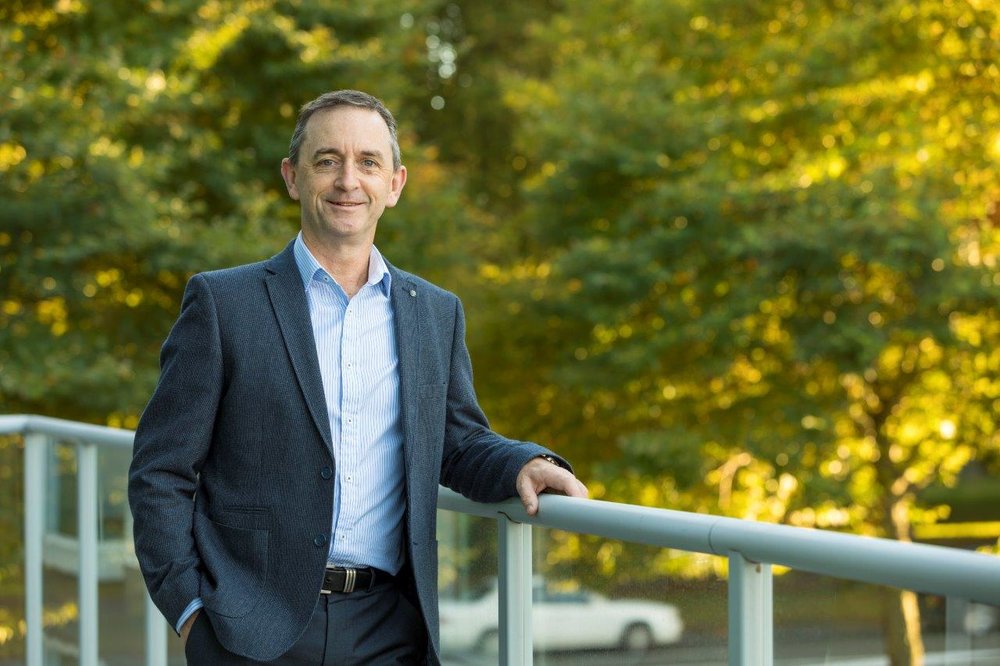
The Geoengineer.org team attended Bentley Systems’ 2024 Year in Infrastructure & Going Digital Awards that was held between October 8-9, in Vancouver, Canada. There we got the chance to interview the Chief Executive Officer of Seequent, The Bentley Subsurface Company, Graham Grant.
Interview:
Interviewer (I): Geoengineer.org
Interviewee (G): Graham Grant
I: I would like to kick off the conversation mainly with the projects that you are excited about at this time. If you have any specific favorites like ongoing projects or new software coming and then I have just a couple of questions to ask you.
G: So when you say, what are we excited about in terms of what our current product portfolio is?
I: Yeah, your personal interests as well, are you excited about upcoming software or any major upgrades? So, for example, I was really happy with the new release of PLAXIS that integrated a new constitutive model.
G: So, I guess what I'm most excited about is the connectivity between as opposed to what's inside. So of course we're developing PLAXIS. You're aware of GeoStudio, yep? So, GeoStudio, and we have the old SoilVision product, which is now part of that whole portfolio, and we have OpenGround and gINT which you know is geotechnical data management.
And do you know of what we do in ground modelling with Leapfrog?
I: I just started using it, yes.
G: OK. Leapfrog Works, so I guess the thing that I'm most excited about is what's possible when we facilitate better workflow between those products, right?
What's an example? I have some site investigation information and boreholes. I can build a basic geological model which describes the geometries of the ground and then maybe I can run some analysis on some sections that tells me something about the properties and then I can run that into say PLAXIS for example, because maybe my problem is I've got a slope and I'm worried about failure, so if I put a tie back what would that do to the factor of safety?
You can improve the factor of safety, but then I have another borehole, I think I don't quite understand that enough. So do another borehole. I can run it back through Leapfrog. I can then re-do the analysis, and I can update my understanding of the ground.
We're working really hard to join those things up because out there in the real world and the industry, people do this and they hand it to someone else and they hand it to someone else. But what if that whole thing could be integrated? What if it could be seamless?
Better still, what if you could move towards a degree of integration where you can ask the question many, many times and so that's what makes me excited because ultimately, at the end of that, there's a reason why that's been done.
So, in my case of the slope, maybe a cut slope on a road or something, maybe the customer is fearful about failure under, say, seismic load. And so I want to test different retention mechanisms. So, I want to iterate and test and try maybe, that's what I want to do and that is not conventionally how work is done.
I think our vision I guess is to be able to, you know, reimagine how that work’s done and just produce a fundamentally high-quality outcome which is either better for risk or assurance. We can sleep at night, you know.
I: Yeah, sure, and then in some of the presentations as well, and it’s a general trend with the rise of AI and machine learning, especially engineering, you listen to that every time in every conference, and so many papers.
I wanted to ask you what your plans are for optimizing maybe some features or software with AI and machine learning, or improving accuracy. I saw the OpenSite+ software today, but do you have any more things you are working on?
G: Yeah, so we are moving forward, I would say we're moving forward cautiously in very specific places where we know that there is sufficient data reliability on which to build a model. And one of the big differences of engineering and the subsurface is that engineering is typified by precision and accuracy, right?
The subsurface is the complete opposite of that, as you would know. In fact, there are places where we build models with virtually no data. It's kind of an approximation, right? And, you know, a groundwater model would be a good example of that.
So, to move from that situation to, as we say, AI on which you base a decision and you're placing great confidence in the outcome of AI, you have to ask a question about on what it is built. So, we're focusing our efforts in places where we have immense data control.
So, poor imagery is an example of a place where we have a lot of control. Drill hole, take a photograph and chip right. Build a model. Automate. That's an example.
I: I watched a previous interview where you said you were developing a new cutting-edge software in collaboration with some video game developers. Will we get to see it soon?
G: It's available now, and it’s free. And would you like to write it down? So, www.visiblegeology.com, and this one is a conceptual modelling tool.
So, it's not for geotechnical analysis, but it's for ground modelling, mainly for teaching. The primary audience for this tool really is the university lecturer who's trying to convey concepts of structural geology to a student who doesn't understand.
Greatly simplifies the problem, gets rid of the complexity, and it presents it in 3D and its interactive student can work with and so there is no tool like it in the world, nothing like it.
Lecturer can build a model, save the model, class can download the model, play with the model.
And we're trying to solve a key problem, that the industry largely has got older people who are going to retire. In many of our countries the number of new students coming into these universities is falling very, very fast.
So, this combination is a real problem. The reason for going to a game company is that it presents a very modern idea that the 17 year old today can understand the approach because it's more like what they are used to working with and it's attractive and it's cool and it's not complicated.
I: So, I finished my master’s in 2018, and the industry is moving forward at such a pace that I'm feeling that my toolkit is currently outdated from what I learned in the university because we didn't have much computer programming, but Python is one of the basics now. So a skill problem will be a problem I guess.
G: It's interesting. My son was heading towards civil engineering and Python scripting in year 1, which is the introductory general year, was mandatory. If he failed Python scripting, he couldn't even progress into engineering.
I: It makes sense the industry is just changing rapidly.
G: That's a great point. I think the traditional software of our industry has been one where there's a lot of macros and scripting to do all this. You know, bend it inside out and do crazy things.
Now you know PLAXIS, so PLAXIS does provide a scripting interface, and it does provide an API, so that's a little bit unusual. That, in fact, is the only product we've got that runs a kind of script interface, but generally speaking we don't run scripts because we want to lower the barrier to entry and reduce the self-imposed customization of that application of the software.
So, if I leave the company you can pick up my model and still use it. You don't need to interpret all my Python code, right?
I: Personally, I like this in PLAXIS that it is very user friendly, especially compared to other software that you need to create all those input files. But I like it that you can also create your own scripts and customize some things if you want to, it gives you the chance to do so.
So, my next question is about sustainability, which also is a big topic. The question is, how do you think that these new technologies we have and the shift to 3D modeling and building information modeling and digital twins could help in sustainable design?
G: Well, I think if I could answer that from a subsurface perspective, I couldn't answer that from a Bentley structural engineering perspective. But on the subsurface there's so many places where what we do has a huge impact on sustainability.
I'll just think of three examples. So, if you're building a piece of infrastructure and you can understand the context that's right around the infrastructure. So, for example, what is the ground condition risk, say groundwater risk on a piece of infrastructure, the infrastructure’s here but the risk is out here, we can provide that context. In other words, you’re future proofing the infrastructure, that would be one example.
The other one would be the place where you're building the infrastructure. Over the life of the asset, again, there is risk or maintenance cost you will incur on an infrastructure because of something like deformation of the infrastructure cause you didn't understand sufficiently the ground conditions, right? So that would be another example.
I think the third one, which I get kind of almost more excited about because we don't talk about it so much is, imagine a road, a long piece of linear infrastructure or a railway, and you've got to move a lot of soil, right? A lot of ground. And we know when you're in a project like that you try to redeploy the cuts to fill as much as you can.
So, if you have better precision about what's underground, you simply do less movements, right? You're going to truck less away and bring less in. There's less diesel, less time, less project cost, less wastage. That is like a powerful idea. And we saw that with the High Speed 2 project, the rail project in the UK, using our software completely transformed how they thought about cut and fill, which is a really boring subject, but wow it's expensive. You know, in a steep country particularly, think of Greece, right? I mean, you were cutting through the side of a mountain or cutting through a road every bucket load on that digger you put in there, that’s money, that's cost, that's time, that's risk. We can minimise that, wow, that's a huge change to infrastructure projects.
I: It is, yes. And I also saw this in some projects in the presentations, especially using Leapfrog, which really helped gain a better geological model.
So, I asked some of these people yesterday and they said that they created the geological model, then they identified some points of uncertainty because of Leapfrog, and then went back and they had some inclined boreholes, some extra boreholes, to gain a better understanding. They said that they saved a lot of time, they designed better, more future proof and they saved money and time and also carbon emissions, which is the next topic.
I saw in some presentations how nowadays an environmentally sustainable design is also based on measuring the project’s carbon emissions. Is this something that we could currently do with Seequent software? And if not, is it something that you're planning to integrate?
G: For the most part we're measuring the ground as it is, right? We tend to think about carbon emissions based on an activity like build a building, machinery movements. Which is the sort of operations phase, construction, those sorts of things which just tend to be not where the software is used. The software is used to build an understanding in the first instance.
Probably the nearest opportunity for us would be in geothermal energy.
As you bring steam out of the ground, because the steam originates in geology, all steam carries a degree of CO2, so we currently don't measure the CO2 because that is an in-situ live operational measurement question.
It's not possible for us to assess the CO2 in-situ in the ground. So, it's really something that's a distance away from what our software does.
I: OK, geothermal energy is a great example. I would like to ask your opinion on it as well. What do you think the future of geothermal is going to be?
Because as far as I'm concerned, at the moment, geothermal output is not very large, and you need to drill very deep and have a very large plant to produce the results that could more easily be achieved with solar or wind.
So, what do you think that the future is going to bring for geothermal energy? What do you see as the main use it could have, would it be industrial or residential?
G: I would need to break the geothermal energy market into some distinct pieces because it's not one unified market, right?
So, if I start with the most common one, we all know about which you would know from Italy, you would know from France, well, it's literally more so high temperature. So, temperatures sufficiently high to run through a steam turbine.
It could be binary technology, but it's high enough that you can run a steam turbine and generate electricity, right? So, the potential there tends to be more limited to where there is plate boundary.
The Philippines, New Zealand, Japan, Indonesia, Iceland, the Rift Valley in Africa. So, there's a lot of energy there but it's always competing against some other energy source
That market has a lot more potential, but it's very, very thin margin. So, could we do more? Yes, we could do, and I'll get back to why we don't, but we could do more.
The other side comes down the temperature gradient to low temperature, where it's too low to generate kilowatts of energy, but it can heat up.
So, in Europe, maybe not Greece so much, but certainly where I came from in the UK originally, every house has a radiator and the radiator is full of hot water and the hot water comes from gas, so that can just be hot water from out off the ground.
Paris is heated by just hot water out of the ground, so there is a huge opportunity to do more of that if the basement rock is sufficiently warm, you know 60, 70, 80 degrees.
FORGE, the frontier of renewable geothermal energy funded by the Department of Energy and the US, they reckon that that you could supply 40% of all the US’ energy needs, it's a huge market. Because of its lower temperature heating, it’s also cooling, so you can cool as well. So, there's that side of the market.
There's a third part of the market, which is supercritical heat. So, supercritical is the other end, it's higher temperature than high temperature. Now that's a frontier market that hasn't really opened up yet because there's engineering challenges. It's kind of dangerous, you're drilling into magma, you're getting temperatures that mean the physics of the wasting works is so different.
New Zealand is soon to invest in the world's first supercritical high temperature magma geothermal power system. So that will be very, very interesting.
There's a fourth area, which is when the water comes out of the ground what's in the water? So, as well as getting hot water, what about brine? And in the brine there's lithium, there's silicas, there's all these things which you can extract and you can extract CO2 right? So, as the CO2 is liberated from the ground, you push that into a glass house and you grow tomatoes. Just water plants need, they need CO2, so you have a CO2 conversion technology called agriculture.
So, there's kind of an ecosystem around geothermal that you can develop for the use of low temperature power. I use the example of heating the house, but you can dry milk, you can dry timber, you can dry fruit products, you can heat a glass house in the winter and grow vegetables all year round, and they do that in New Zealand on a huge scale.
So, I think the potential’s there, we need to think differently.
The one thing that geothermal has got going for it that other technologies don't is that it's base load energy. So solar is not base load, doesn't work at night, wind’s not base load, doesn't work when it's not windy, and industrial modernistic societies like data centres, and industry needs constant base load that's reliable and doesn't stop, and that's what geothermal gives you.
So, we need to rethink the generation mix is what we need to do.
Want to read more like this story?

The Berkeley Center for Smart Infrastructure: An interview with Prof. Kenichi Soga, Director of the Center
Feb, 26, 2024 | NewsThe following interview is from 2024 Special USA and Canada Geotechnical Business Directory edition...

How geotechnics can make life simpler, safer and more certain for infrastructure projects
Dec, 10, 2021 | NewsFor any transportation project it’s essential to have a clear view of the subsurface and any proble...

Leapfrog Works
Dec, 29, 2022 | Software
Subsurface Modeling and Analysis Finalists in the 2025 Going Digital Awards
Aug, 22, 2025 | NewsBentley Systems, announced the finalists for the subsurface modeling and analysis finalists in the...

How the Past 30 Years of PLAXIS History Pave the Way for a Promising Future
Oct, 05, 2023 | NewsOver the last 30 years, PLAXIS innovation has driven the geotechnical analysis industry, enabling e...

Material Reuse through geoBIM at HS2 Phase 1 – Area North Earthworks: Winner of Bentley Systems Going Digital Awards on Geotechnical Engineering
Nov, 24, 2022 | NewsThe 90-kilometer HS2 Phase 1 rail route has approximately 25 million cubic meters of material ear...

Geothermal Energy Could Power the U.S. for Millennia—Here’s How
Mar, 08, 2025 | NewsFor decades, geothermal energy has remained a largely untapped resource in the United States, limit...

PLAXIS 2023.2 New release is out!
Sep, 07, 2023 | NewsThis latest release solidifies Seequent's Connected Geotechnical Workflow, reducing the need for du...

Geothermal Energy Scales Up for Data Centers in New Mexico
Jun, 23, 2025 | NewsA 150-megawatt advanced geothermal project is underway in New Mexico to support data center operati...
Form
Looking for more information? Fill in the form and we will contact Seequent, The Bentley Subsurface Company for you.
On This Day

Related Video

Trending

China's Three Gorges Dam under pressure: Flood hazard downstream

Functional requirements of foundation structures


Landslide in Papua New Guinea: At least 12 people dead

Deadly mining landslide in Central African Republic raises safety concerns