
- Deformation in the inner core: The solid iron-nickel core appears to be shifting by up to one or two kilometers due to forces from the outer core.
- Impact of turbulence: The dynamic motion of the liquid outer core is actively reshaping the inner core’s boundaries.
- Connection to Earth’s rotation: These deformations might be linked to the ongoing slowing of the inner core’s rotation, which has been observed in previous studies.
Sources: latimes.com, downtoearth.org.in
Want to read more like this story?

Scientific Advances in Core-Surface Material Exchange and Their Significance in Mineral Exploration
Jun, 25, 2025 | NewsNew geochemical evidence has confirmed that the Earth's core may not be as geologically sealed as o...

Exploring New Depths: The Impact of Diamond Core Drilling on Modern Engineering
Oct, 08, 2024 | NewsThe global diamond core drilling market is experiencing a rapid expansion, driven by technological...

Advanced Modelling for Deep Burial Structures in France
Mar, 01, 2025 | NewsIn the heart of France’s Callovo-Oxfordian (COx) claystone, a complex challenge unfolds—how do we s...

Magnetism found in Earth's mantle
Jun, 20, 2019 | NewsNew evidence come to challenge the current belief that the Earth's mantle is regarded as non-magnet...
HxGN NetWorks Core | Mobile
Sep, 18, 2023 | Software
Datgel Photo Tool
Oct, 24, 2013 | Software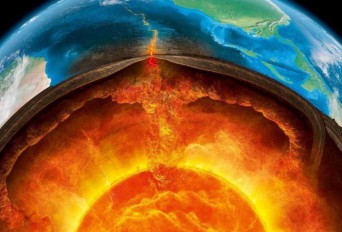
Increased seismic hazard due to Earth's rotation slowdown
Jun, 28, 2018 | NewsScientists from the U.S. believe that a significant increase of earthquakes will occur beginning fro...

The $5.7 Trillion Rock: Inside Earth’s Biggest Iron Recent Find
Mar, 23, 2025 | NewsA seismic shift has shaken the world of geology—figuratively, this time. In the Hamersley region of...

Kazakhstan unveils high-tech geological cluster to advance national exploration capacity
Nov, 24, 2025 | NewsKazakhstan has inaugurated its first high-tech geological cluster in Zhezkazgan, marking a major st...
On This Day
August 4th 1906
READ MORE
Related Video

Trending

Quick Clay Failure on Norway’s E6 at Levanger

Keller North America announces recent leadership changes

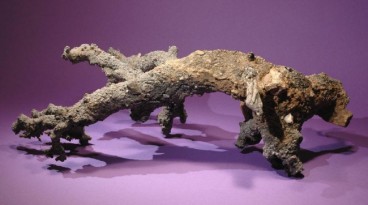
Fulgurite: A rare phenomenon
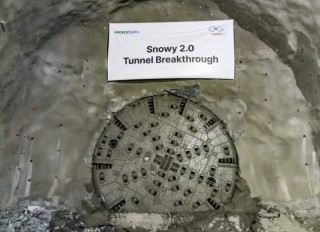
Tailrace tunnel breakthrough advances Australia’s largest renewable project
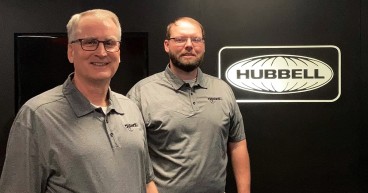
A Legacy of Leadership, Mentorship & Service: Gary L. Seider P.E.