A Legacy Carved in Stone: Celebrating the Life and Work of Dr. Evert Hoek Sponsored
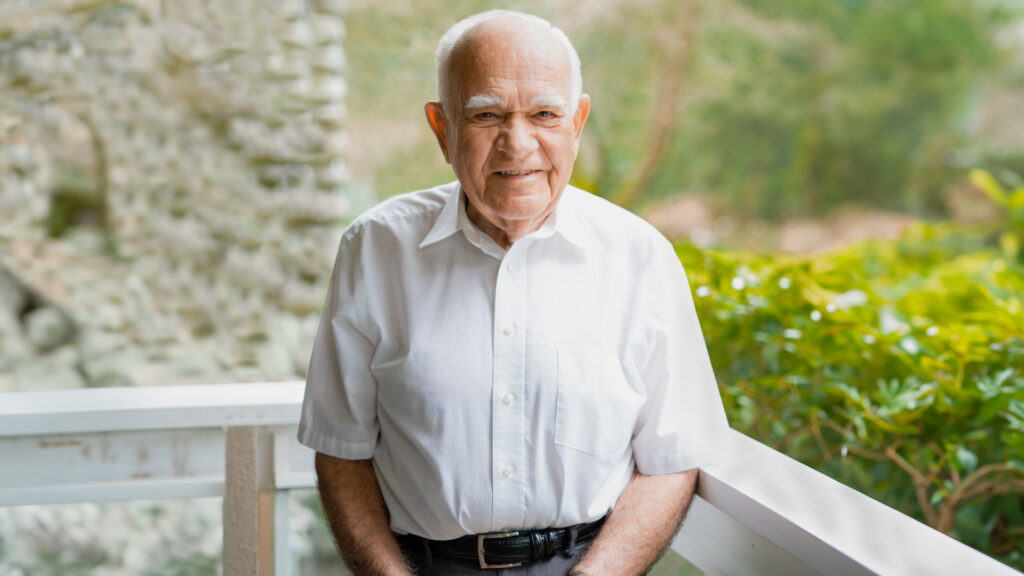
Dr. Evert Hoek (1933-2024), a name synonymous with rock mechanics and rock engineering, passed away on July 6, 2024, leaving behind a legacy that has shaped the very foundation of our understanding of how to design and build in and on rock masses. His journey, spanning over six decades, transcended geographical boundaries and disciplinary silos, transforming him from a mechanical engineer into a global authority on the intricate world of rock behavior. This article aims to celebrate his remarkable life and the profound impact of his work, particularly in the realm of underground engineering.
From Photoelasticity to Rock Fracture: The Genesis of a Rock Engineer
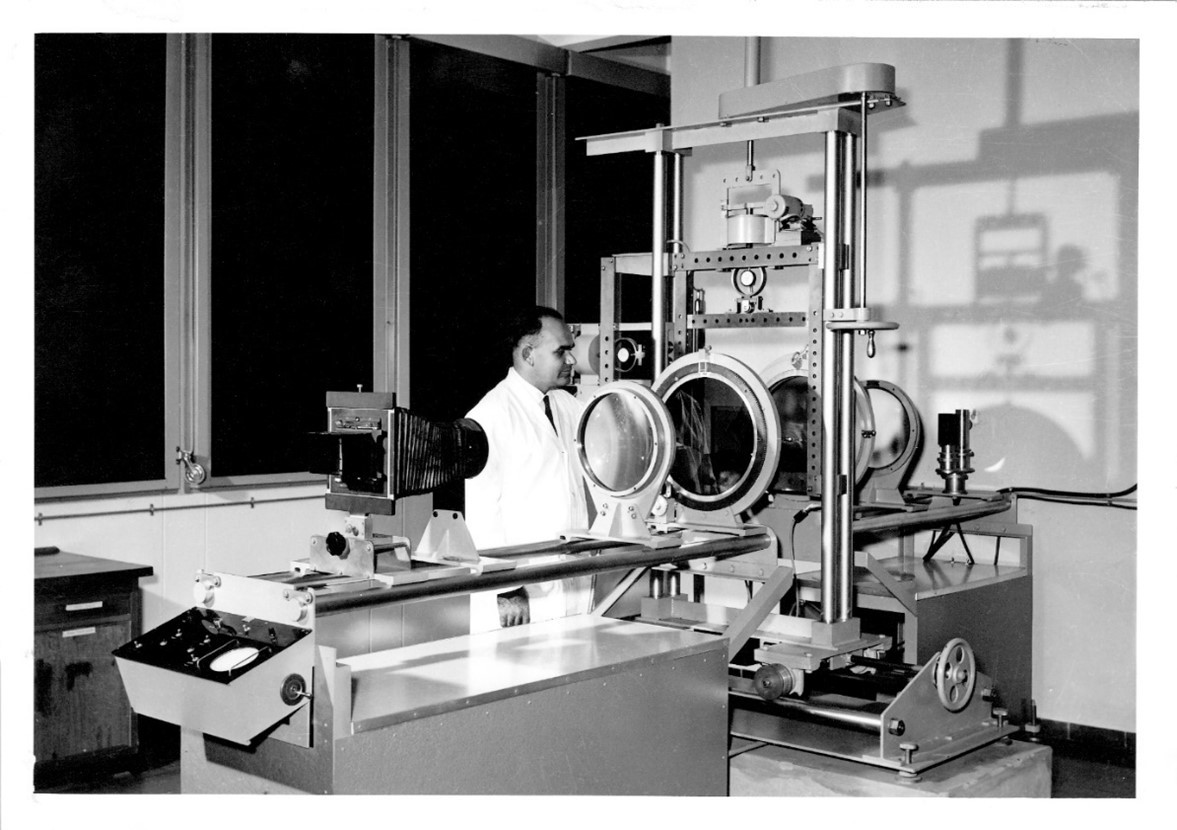
Hoek's early academic pursuits at the University of Cape Town focused on mechanical engineering, where he explored stress distribution in threaded connections using photoelastic techniques. This seemingly unrelated area would prove to be a valuable foundation for his later work in rock mechanics. In 1958, he embarked on his rock mechanics journey at the South African Council for Scientific and Industrial Research (CSIR), investigating the challenges of brittle fracture in deep-level gold mines. This research led him to develop a deep appreciation for the complexity of rock masses, moving beyond the traditional view of rock as a simple, intact material. He recognized the significant influence of discontinuities like joints and faults on the strength and deformation of rock masses, a perspective that would become a cornerstone of his future work
A Holistic Approach to Rock Engineering: Combining Theory, Experimentation, and Observation
Hoek's approach to rock engineering was characterized by a remarkable blend of theoretical rigor, meticulous experimentation, and keen field observation. Early in his career, he recognized the need for specialized equipment to study rock behavior, leading him to design and build groundbreaking tools like the Hoek Cell for triaxial rock testing. This invention, which remains a staple in rock mechanics laboratories worldwide, highlights his hands-on approach and his commitment to bridging the gap between theory and practice.
His PhD research, which examined the brittle failure of intact rock, was a testament to this multifaceted approach. It involved developing theoretical models, designing and conducting laboratory experiments, and meticulously documenting his findings. This research laid the groundwork for his later contributions to understanding the strength and deformation characteristics of rock masses, particularly in the context of underground excavations.
A Legacy of Innovation: The Hoek-Brown Failure Criterion and the Geological Strength Index
Hoek's most enduring contributions lie in his development of two groundbreaking tools that have revolutionized rock engineering practice: the Hoek-Brown failure criterion and the Geological Strength Index (GSI). The Hoek-Brown failure criterion, co-developed with Dr. E.T. Brown, provides a robust framework for estimating the strength of rock masses, a crucial aspect of designing safe and stable underground structures. This empirical criterion, unlike previous approaches, recognized the critical influence of geological factors on rock mass strength and introduced the concept of the Geological Strength Index (GSI). The GSI, a system for characterizing rock masses based on visual assessments of their structure and surface conditions, enabled engineers to link qualitative geological
observations with quantifiable parameters for engineering analysis. This innovation bridged the gap between geology and engineering, allowing for more realistic and reliable designs in complex geological settings.
Championing Practical Rock Engineering: From Textbooks to Consulting Boards
Beyond his theoretical contributions, Hoek was a fervent advocate for a practical and observational approach to rock engineering. He cautioned against the blind application of formulas and emphasized the importance of careful site characterization, geological understanding, and engineering judgment. His seminal books, "Rock Slope Engineering" and "Underground Excavations in Rock," published during his time at Imperial College London, became indispensable resources for practicing engineers, offering clear explanations of complex concepts and practical guidelines for design.
Hoek's commitment to knowledge sharing extended beyond traditional publications. He embraced emerging technologies, developing software tools like Examine2D, which later evolved into the comprehensive suite of software offered by Rocscience, a company co-founded by one of his former students. This initiative made advanced analytical tools accessible to practicing engineers, empowering them to address complex rock engineering challenges more effectively.
In addition to his academic pursuits, Hoek was actively involved in consulting for numerous high-profile engineering projects around the world. His practical experience, coupled with his deep theoretical understanding, allowed him to contribute to the successful completion of challenging projects, often involving tunneling in difficult ground conditions.
A Voice for Rigor and Progress: Challenging the Status Quo
Hoek was not afraid to challenge the status quo within the rock engineering community. In 1995, he published a letter in the ISRM News journal expressing concerns about the over-reliance on sophisticated software without adequate data to support their use. He criticized the tendency to "invent" data to fit models and called for a renewed focus on collecting high-quality, reliable data to improve the accuracy and effectiveness of rock engineering designs. His willingness to speak out against prevailing trends underscored his commitment to scientific rigor and his desire to push the boundaries of knowledge in his field.
Mentorship and Inspiration: Shaping the Future of Rock Engineering
Hoek's impact on the rock engineering community extended far beyond his technical contributions. He was a dedicated educator and mentor, inspiring generations of engineers and researchers. His teaching at Imperial College London and the University of Toronto, coupled with his lectures and freely available online resources on "Hoek's Corner" on the Rocscience website, made complex rock mechanics concepts accessible to a wider audience. His clear and concise explanations, often infused with real-world examples from his consulting experience, resonated with students and professionals alike, shaping their understanding and approach to rock engineering challenges.
Hoek's legacy continues to inspire and guide rock engineers and researchers around the world. His work has pushed the boundaries of our understanding of rock behavior, leading to safer, more efficient, and more sustainable designs for underground structures. His emphasis on the interplay between geology, theory, and practice remains a guiding principle for rock engineers navigating the complexities of working with rock masses.
Beyond the technical achievements, Hoek's story reminds us of the importance of curiosity, collaboration, and a relentless pursuit of practical solutions. He was a true pioneer, leaving behind a wealth of knowledge and tools that will continue to shape the field of rock engineering for generations to come.
For more details visit: https://www.rocscience.com/learning/hoeks-corner
This article is from 2025 Special USA and Canada Geotechnical Business Directory edition, available as an e-book and in-print, and will be distributed for free during the Geotechnical Frontiers 2025 through ARGO-E GROUP’s booth.
Want to read more like this story?
Rock Mass Characterization
Mar, 18, 2020 | EducationRock mass is a matrix consisting of rock material and rock discontinuities. Its characterization...

PLAXIS Webinar | Introduction to Rock Engineering Projects in PLAXIS
Feb, 18, 2022 | EventLearn more about rock engineering applications, their challenges, and the resources you can use to...
Rock Engineering
Mar, 18, 2020 | EducationRock mechanics is part of the broader scientific field of geomechanics which refers to the scienc...
Principal Considerations in Rock Engineering Practice and Contributions from Africa
Nov, 10, 2022 | NewsIn the Introduction to this paper, many names are mentioned of those with African origins or associ...

How to Model Rock Engineering Problems in PLAXIS Geotechnical Analysis Software
Jan, 21, 2022 | NewsRock engineering projects can be fascinating. Engineers working on rock need to design solutions th...
Hoek-Brown Model – Rock Behaviour
Jun, 30, 2025 | EducationThe Hoek–Brown model is one of the most widely adopted constitutive models for simulating rock mass...

In Memoriam: Dr. Evert Hoek (1933 – 2024)
Jul, 19, 2024 | EducationDr. Evert Hoek was born in Southern Rhodesia (now Zimbabwe) in 1933 and passed away on July 6, 202...

The Precursor to RSData: Hoek-Brown Failure Criterion
Feb, 05, 2021 | NewsThe Precursor to RSData: Hoek-Brown Failure Criterion Numerical modeling of geotechnical structure...

RockLab – Failure criterion of a rock mass according to Hoek-Brown
Jun, 15, 2023 | SoftwareForm
Looking for more information? Fill in the form and we will contact Rocscience Inc. for you.
On This Day
August 21st 1883
READ MORE
Trending

Seven Frequently Asked Questions about Helical Piles

Block caving: A new mining method arises

Categories of isolated foundation footings
Maharashtra's longest road tunnel to be completed soon

Carnian Pluvial Episode: That time when it rained for 1-2 million years
Major wastewater tunnel procurement begins in southern Sweden